Tuesday, March 27, 2007

Hibbing


Our bus left Minneapolis, one time home to F. Scott Fitzgerald, bound for Hibbing via Route 35 at 8:30 AM. Our invading force included fans, lawyers, scholars, poets and professors. During the three hour journey we discussed lepers and crooks while watching Dylan DVDs. For almost all of us, it was our first pilgrimage to Dylan’s hometown where Greyhound Bus originated. Joining us on the bus tour was famed Dylan author Michael Gray.


50 Dylan fans gathering around Zimmy's. Our possee included folks from six different countries.
When we arrived in Hibbing at noon, the sign of the Wells Fargo Bank informed us it was 69 degrees. A change in the weather is known to be extreme, but according to locals, a month earlier it was 20 degrees below zero.

Our first stop was a fine establishment named Zimmy’s, where a buffet of delicacies including brownies made from Beattie Zimmerman’s recipe awaited us. Owner Bob Hocking, who rolled out the red carpet for us, changed the name of the place to Zimmy’s about 15 years earlier. Two large dining rooms with a wrap-around bar in the middle are decorated with a plethora of Dylan memorabilia dangling from all over. B. J. Rolfzen was on hand signing copies of his memoir on growing up during The Depression in Minnesota. B.J. was Bob’s English teacher and an important influence in developing Bob’s love for words and poetry. Also joining us for the tour was Hibbing resident, Leroy Hoikkala, who was the drummer in Bob’s high school band the Golden Chords.


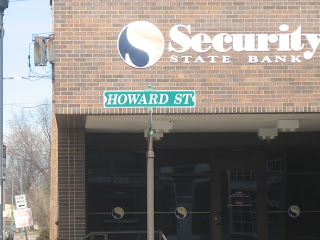
You can call this place Zimmy's...located on Howard St. in the heart of Hibbing.


Howard just pointed with his gun, he said, "that way down Highway 61!"


The Magical Mystery Bus Tour began with a visit to the original Hibbing, which is at the bottom of the largest man made pit in the world. The pit, which helped fuel U.S. victories in World Wars I and II, stretches low and wide in all directions. Hibbing is known as “the town that moved.” The mining companies literally moved Hibbing two miles south so that they could get at the vast quantities of iron ore that lay beneath the heart of town. Many houses were uprooted and moved fully intact. Hibbing was a well off community at the time, so to placate the residents; the mining companies built three magnificent structures for the community: The Androy Hotel, City Hall, and Hibbing High School.


The World is Yours! Welcome to the largest man made pit in the world, formerly Hibbing, Minnesota


Hibbing High School is where Bob Zimmerman received his education, grades 1-12. In 1920 money, the school cost 4 million dollars to build. It’s a colossal four story structure – a monument to the importance of education. Numerous artistic treasures can be found throughout. The architecture is dazzling, marble busts, brass rails, decorative ceilings, and painted murals decorate this building. It’s the type of school you would expect Roman Emperors to build for their children. It’s the only time I’ve ever been impressed by the sight of a high school.


Here it is - Hibbing High Auditorium, modeled after the Capitol Theatre in New York. This stunning theatre, which masquerades as an auditorium, seats 1805 people. It’s the scene of Bob’s first public performance which didn’t go so well. Instead of giving him the hook, the principal cut of his microphone. An axe wielding Pete Seeger was backstage threatening to smash the piano to smithereens if the principal didn’t put an end to the proceedings.Ho ho ho. Maria Mulduar is scheduled to perform on this stage for Dylan Days 2007. Here’s some pictures, that due to poor lighting, don’t really capture the majesty of this venue.


This is the house where Bob grew up. The owner was kind enough to let us in to see the bottom floor. It’s a modest, yet cozy house with eight foot ceilings downstairs. On those 20 degree below zero Hibbing nights, Bob must have been up in his bedroom listening to the radio and dreaming up themes and schemes.

None shall Pass! That’s me blocking the front entrance to Bob’s Childhood home. I appear to be in some sort of meditative trance.

Inspired by my day in Hibbing, I expressed myself by painting Blood on the Tracks on the garage of the former Zimmerman residence.


Hibbing Memorial Arena - A place to enjoy some good clean fun.

A typical Hibbing Saturday in March, the ladies are curling the afternoon away. It’s the first time I’ve ever seen live curling.

If you prefer rock and roll, you can head downstairs to the “Little Theatre.” Led by Robert Zimmerman, the Golden Chords rocked the house with Little Richard’s Jenny Jenny back in 1958.


Dylan Symposium at the University of Minnesota…Bob Hocking, owner of Zimmy’s (center), an enthusiast from Alaska (left)

A special thanks goes out to Coleen Sheehy who was instrumental in putting together the Dylan Symposium, the exhibition at the Weisman Museum and the bus trip to Hibbing.

Monday, March 26, 2007

Dinkytown


DINKYTOWN

My first mission in Minnesota was to find Dylan’s old crib during his stay in Minneapolis. That was a cakewalk. The first building I saw in Dinkytown was Loring Pasta Bar which was formerly Gray’s Drugstore. Dylan rented a second floor apartment there, and his fascination with Woody Guthrie began around this time in 1959. If you look at the pictures of Loring’s, the old façade of the drugstore is still visible. However, any traces of Dylan’s time there or of a folk scene have vanished. Even the famed Ten O’clock Scholar Coffeehouse no longer exists. The business area of Dinkytown encompasses an area of about four small blocks. This charming part of town has a smoke shop and two excellent bookstores. Dropping by Loring Pasta Bar for at least a cocktail is a must, the scenery inside is elegant, but the food’s expensive for an establishment in this tiny village.


After interrogating the employees at Loring’s, a few of them informed me that they thought the party room, also known as the Red Room, is where Dylan resided. There’s a framed photo of Bob in the room.


The Red Room


It’s possible that part of the Red Room was Dylan’s, but in Chronicles he says that he had a window that looked out into an alleyway which leads me to believe that this was where his apartment was located:


Thursday, March 22, 2007

A Week In The Life


A WEEK IN THE LIFE

A glorious, yet savage excursion with the Jerry Garcia Band

During an eight day odyssey that concluded on the evening of June 5, 1983, I would spend seven nights and ten shows with the Jerry Garcia Band at intimate theatres in the Northeast. Traveling mainly with two of my best friends, we experienced Jerry Garcia at the height (and weight) of his extraordinary guitar prowess. With the Grateful Dead, Garcia’s prime was from 1969-1977, but his glory days with JGB were this magnificent swing through Yankee country in the late spring of 1983. However, our golden road had some nasty bumps along the way. We pushed our young minds and bodies to the point of total exhaustion, even flirting with death. We bought the tickets and we took the rides. Ho ho ho.

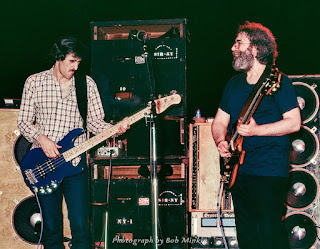
It all started innocently enough in the world’s insurance capitol, Hartford Connecticut, on Sunday, May 29, 1983. After loosening up with some libations at a local watering hole, my accountant and I made our way into the lovely Bushnell Auditorium. We had a bullet packed with Peruvian powder to entertain us while waiting for Jerry to take the stage from our dead-center, fifth row seats. We were awe stuck by our hero’s appearance. His frizzy unkempt grey hair and beard looked wilder than ever. He seemed to have added 20 pounds to his mid-section since the last time we had seen him just two months earlier. Jerry was hooked on Persian (a pure heroin derivative) and Haggan Dazs. Despite his rapid aging and health problems, he looked more God-like than ever to his faithful. Standing practically in one spot all night with his gold-rimmed glasses barely clutching on to the bottom of his nose, his eight and a half fingers were a blur as they molested the fret board of his custom made Tiger guitar.

As if Garcia wasn’t enough of an eye full, the other five members of the band made the visuals more surreal. JGB was an equal opportunity employer and the embodiment of the American Dream. Including Jerry, the band was half white and half black, featuring four overweight individuals playing for crowds consisting of skinny white hippy types. The funky soulful keyboardist Melvin Seals was beginning his third year of service with JGB. Making their debuts with Jerry were backing singers Dee Dee Dickerson and Jacklyn La Branch, and drummer Greg Errico.

We were all familiar with the skinny guy who had played bass guitar with Jerry since 1971. John Kahn had a powerful stage presence in spite of his slender frame and he was a devil of a bassist. Even though Jerry was a member of the Grateful Dead for 30 years, I could make a strong argument that Kahn was his most trusted musical confidant. Like a spouse often follows their loved one to the grave, John Kahn passed away less than a year after Jerry’s death in 1995.


Garcia wasted no time by blowing us away with the opening number of the night Sugaree. Unlike Grateful Dead versions, there was no doubt Jerry’s guitar playing was going to dominate on all three opportunities for a solo. His second foray was one of the most impressive displays I had heard from him in my first 26 months as a Deadhead. On this tour, Jerry was stepping up his game to a new level. Almost every song over the next week would feature multiple dynamic electric guitar leads. Jerry really shined on Catfish John and the rarely played Tore Up as well. At first, the encore sounded a lot like Chuck Berry’s Let it Rock, but Jerry was reintroducing his epic guitar masterpice Rhapsody in Red into the rotation for the first time since 1978. This was Jerry’s fourth show of the tour, and it was a superb introduction to the finest week of music I would ever witness.

Hitting the road again the following night, I shuffled a new set of passengers into my maroon Chevy Caprice Classic for our jaunt to Hartford for Jerry’s second and final performance at the Bushnell. My lawyer was by my side keeping us amused by filling up one-hitters and shuffling Grateful Dead tapes in and out of the deck. A great friend of mine, my lawyer turned me and several thousand others on to the genius of Jerry Garcia. We didn’t have tickets for this concert and things looked ominous as we neared the Bushnell. Packs of desperate freaks were looking for tickets, demand had greatly exceeded supply for this sold-out concert.


We were feeling pretty down and out until we heard a hippy exclaim,”Hey man, a miracle door just opened.” Inside was a stairwell that led to the Bushnell’s mezzanine. About 60 of us scampered up those steps like rodents making their move on a Taco Bell when the lights go out. Once inside, we were safe, dancing amongst our brethren. The highlight of the night was watching my lawyer dance around like a chicken on ten hits of mescaline during Mystery Train. Garcia clocked in with another outstanding performance, but the shows that followed the next two nights made this show pale in comparison. This JGB swing was a sycophant’s delight.

Jerry’s next stop on the last day of May was the Roseland Ballroom located on New York City’s West Side in the Theatre District. Though a San Francisco native and legend, Jerry was always eager to impress his rapid East Coast following. Performing in the New York metropolitan area brought out the beast in Jerry. Unlike the restrictive atmosphere of the Bushnell, these Roseland gigs were anything goes affairs. Underneath a tantalizingly exotic could of hash, opium, kind bud, and cigarette smoke, an extremely giddy crowd awaited Jerry’s arrival on the spacious dance floor which was surrounded by carpeted lobbies and long-sleek bars. It was the ideal concert setting. A little too coked up or you’re beginning to see Tasmanian devils, no problem, just head to the bar, score a cocktail and chill out without missing any of the action.

Matching the buoyant mood of the show, Jerry wore a red t-shirt which was his only wardrobe option beside black. Opening the night with the hard-charging rocker Rhapsody in Red, our fearless leader stepped to the microphone and bellowed:

“I love to hear that Rhapsody in Red
It just knocks me right out of my head
Lifts me up here
Just floatin's around
Sends me way up
And it don't let me down”

Floatin’ around and sailin’ away, Jerry had the crowd joyfully prancing around in a hypnotic spell. Jerry was on fire from the start as he shredded his first long instrumental of the evening. They Love Each Other, a familiar song that often occupied the second slot at JGB and Dead shows was extra funky. Soulfully pounding away on his Hammond M-3 with a big grin, Melvin Seals made sure of that. Garcia followed up with a two tiered assault that turned this routine number into something distinctive. His initial lead was like a reconnaissance mission testing the waters, but just holding back enough for round two. He proceeded to turn up the heat during his follow-up exploration, reaching crescendos never heard before on this somewhat tame tune as the astute NYC crowd roared its approval. It was the only time I’ve heard an audience explode in response to a Love Each Other instrumental.

Matters of the heart were the evolving theme of the night as Jerry checked in with That’s What Love Will Make You Do. The big fellow made us feel the love when he sang, “When they speak of beauty, you can stand the test/ When they talk about making love, baby you’re the best/ Don’t want to brag about you too much and give others ideas/ Trying hard to express myself cause baby that’s the way I feel.” Like many JGB songs, this one features a similar structure in the main jam: Jerry states the theme three or four times on guitar, Melvin takes it around the block once, Jerry and Melvin combine on a funky chord progression and then Jerry nails it a few more time before going back for a final serenade. This is going to start sounding redundant, but this rendition also qualifies as a best ever. After the funky reggae like chord progression, Garcia’s solo was searing, raising the roof off the joint. We were in the midst of seeing a special night of performances.

Garcia followed with two more songs of love, Valerie (a personal favorite) and How Sweet it is. Jerry often used How sweet it is as a warm up or anti-climatic encore. Placed in the fifth slot of this sequence of tunes, it never sounded better as Jerry peppered the crowd with piercing guitar runs. Garcia brought the first set to conclusion with the new Hunter/ Garcia composition Run For the Roses. Those six songs that comprise the first CD of this concert, remains one of my favorites, everything came up roses and aces.

Set number two featured a fluent Mission in the Rain and a thorough exploration of Dylan’s Tangled Up in Blue, but a another pair stole the spotlight. Jimmy Cliff’s Harder They Come turned the Roseland Ballroom into a dancing party that could have worked as an episode on the TV show Soul Train. Errico, Kahn, Seals and Captain Trips lost themselves in a wild calypso like shuffle during the mammoth jam. They hit a groove in that prototype funky chord progression and rode it for all it was worth. It was a joyous celebration that felt like New Year’s Eve in Kingston, Jamaica.

Clicking on all cylinders, Jerry’s angelic voice shined on Peter Rowan’s Misissippi Moon. Jerry reached down deep to muster maximum emotion when he sang, “Honey lay down beside me-ee, angels rock us to slee-eep.” Without question, Jerry had delivered his strongest vocals of the tour at the first Roseland show. It was a dreamy night of optimism, everything was groovy.

I met my lawyer at the Roseland bar after the show and witnessed two things we’ll never forget. We watched the doctor operate on the Los Angeles Lakers as the Philadelphia 76ers won the NBA title that night. Dr. J (Julius Erving) started a drive on the right side of the court and headed down the baseline. Julius went airborne, but he was well defended and forced to go behind the backboard. The only choices available were to throw ball off a defender or blindly heave the ball on the court. Instead, he chose to defy logic and gravity as he reappeared from behind the basket on the left side of the hoop to casually lay the ball off the plexi-glass with his long outstretched muscular right arm for two points. It was poetry in motion – the most artistic display I’d ever seen in a basketball game. Shortly after, we were stunned to see two bloody men who were separated by twenty security guards still lustily trying to get at each other. Maybe things turned violent as they debated when the last time JGB opened with Rhapsody in Red was. Anyway, the trail of blood left behind could have restocked a hospital blood bank. The post Dr. j fight seemed to foreshadow a shift in the mood of Jerry’s performance the next night.


Our Captain was back in a black t-shirt as he boasted,” I’ll take a melody and see what I can do about it/ I’ll take a simple C to G and feel brand new about it,” during the opener on the second night at the Roseland. Chez Garcia was all business as blazed through two long JGB prototype arrangements on the first two numbers. Harder They Come was second, but it had a different feel than the jovial offering from the night before. Jerry’s guitar work was equally compelling, but it felt like we were being checked into the boards of a hockey rink. On night two, Garcia’s artistic creativity was focused on the instrumentals; the actual words to the songs seemed to be an afterthought. There was a haunting vibe to the proceedings.

Gomorrah, a Garcia/ Hunter tune dealing with the biblical tale of two cities full of sinners, which was destroyed by brimstone and fire from the Lord out of heaven, was the perfect fit as the fourth song of the presentation. After all, we were listening to the devil’s music while gyrating and partying on a dance floor located in Hell’s Kitchen. A few years earlier, the Bronx had almost burnt to the ground. New York City was the modern day Sodom and Gomorrah. Finding a dime bag of your favorite fix or a whore was as easy as hailing a yellow taxi in Times Square. 42nd St. was cluttered with neon-lit sex shops, degradation, filth, hustlers, pimps, and organized crime. Jimmy Coonan’s gang of violent Irish thugs known as The Westies had a strangle hold on fear in Hells’ Kitchen. They were chopping up the corpses of their victims like butchers, loading them into hefty bags, and disposing of the body parts by floating them down the East River. It seems prophetic when I listen to a tape of the show many years later and hear Jerry sing,” Blew the city off the map.” The city that existed in 1983 has in many ways been eradicated.

The gloomy mood of the opening set carried into the closing set as things became savage. Garcia, giving it his all on his fifth consecutive night of performing, teed off on Rhapsody in Red. Unlike the jubilant reception the song had received 24 hours prior, the stunned/ stoned crowd nodded along in awed admiration.

Next up on that Wednesday night of edition of Masterpiece Theatre was the much sought after JGB classic Don’t Let Go. Whenever you heard Jerry sing, “ Oh wee, this feelings killing me/ Ah shucks, I won’t stop for a million bucks/ I love you so, just a hold me tight and don’t let go/ (don’t let go…don’t let go) Ah hold me tight and don’t let go!” you knew it was one of THOSE nights. The 16 minute instrumental started off with a chopping dark rhythm. It sounded like we were sailing into stormy waters with vultures swooping in. Jerry started tearing through frantic leads that moved this piece into a terrifying abyss. Looking around at the crowd, people were just swaying back and forth like they were in a religious trance. In many ways, this piece was like a group exorcism. Jerry was tapping into some kind of unconscious protest of the state of the world in 1983, similar to what Dylan does with his words. Of course I wasn’t having these thoughts at the time. I was just in a state of disbelief as I watched and listened Garcia give birth to an endless run of creative exploration. Dark Star, the Grateful Dead’s piece de resistance from 1969-‘74, is widely considered to be their greatest creation. This Don’t Let Go was the most Dark Star-like voyage Jerry would undergo in the 80’s.

Crooning against sparse accompaniment, Garcia’s next dirge, Russian Lullaby, had me thinking of the Cold War when he sang, “A land that’s free, for you and me, in a Russian Lullaby.” During this Irving Berlin classic, Garcia noodled away and John Kahn had an opportunity to pluck out a gritty bass solo. Sounding somewhat out of place, Garcia followed with the usually joyful Dear Prudence. The vocal presentation was a little askew, but Garcia made this a classic version with a momentous instrumental passage. If you’re looking for the best version of this song, your search will end with his rendition from five days earlier in Cape Cod on 5-28-83. His Prudence in Cape Cod best illustrates what separates Garcia from the other great guitarists. His patience in exploring every nook and cranny before striding into the peak moment is remarkable. As his work with JGB exemplifies, his greatest talent is finding magic in songs that even their creators couldn’t grasp.

This million note march of a second set was anchored by the most played song of Jerry’s career if you tally up Dead and JGB concerts. The 1971 Hunter/ Garcia composition Deal had always been a crowd favorite about gambling and card games. Throughout the 70’s, crowds were delighted by the infectious beat, action packed instrumental tucked in the middle, and the thrilling sing-along finale of Deal. Sometime in 1980, at a JGB show, an explosive instrumental was tacked on to the end. This jam stretched out show after show, and by 1983 it had become a card shuffling showstopper featured to end sets.

After racing through the first two verses in disconnected fashion, Garcia dialed up the volume on his axe and blasted the Roseland with an ear piercing solo. With his sights set on the immense finish ahead, he plowed through the rest of the Deal’s lyrics with indifference. Kahn and Errico picked up on Jerry’s urgency and laid down a pounding foundation that accelerated during the journey. Garcia stated a theme based on a vicious run of guitar licks that he would repeat thorough out with increasing intensity. Set against the power playing of his bassist and drummer, it felt like Garcia was carpet bombing the ballroom. JGB was louder and more aggressive than I’d ever heard before. If I had to label this Deal with a genre, I’d place it in the heavy metal category. It has such a unique sound, that if you pick the final instrumental up mid-flight, the song’s hard to identify. Garcia pushed it as long and as hard as he could, after six unrelenting minutes, he unleashed all the demons.

Garcia’s artistic endeavor was over, he came back to put some soothing balm on the wounds he inflicted, by giving New York City a How Sweet it is send off. In 48 hours, I had never witnessed such an incredible display of improvisation. The first set of opening night was one of the most dazzling and uplifting musical experiences, then, the same cat checks in with a blitzkrieg of a final set on night two. I have a strong predilection for both, but that five-song finale on 6-1-83 that ended up with that savage Deal, just might be my favorite set of JGB.

Garcia had a much needed day of rest on Thursday, and so did I, more so than I knew at the time. The following three days with my lawyer would be trying and treacherous at times. I regrouped between shows at my parent’s house in Nanuet, New York which was conveniently located within a two hour driving radius of all concerts I was scheduled to see on this tour. I was masquerading as a college student at the time, this was my summer vacation. Every night after seeing Jerry, it was back to home sweet home for a solid seven hours of shut eye followed by flapjacks and coffee in the morning.

There was no stopping us, enough was never an option. In 1983 I caught 38 Grateful Dead shows and 17 Jerry Garcia Band gigs. I always enjoyed the circus-like atmosphere of the Dead experience, but JGB was more intense. When the Dead were at their peak, that was the ultimate musical experience, but there were too many speed bumps and shenanigans on that road. Very few GD shows from the ‘80’s could render anything like we were seeing from JGB at the time. Garcia Band was a safer bet to get what we really needed, a clean dose of PURE JERRY. That was our drug, and these concerts delivered. Garcia was in good enough health on this tour to provide us our needed fix night after night from the beginning of the concert through the end. Sadly, this spring ’83 jaunt was the last time I heard Garcia in peak condition consistently.


Our lust for Jerry landed us in Passaic, New Jersey on Friday June 3rd. Passaic was home to the Capitol Theatre, a rock and roll haven owned by promoter John Scher since 1971. Located 12 miles from Manhattan, the 3,200 seat theatre served host to some of most famous touring acts of the 70’s and 80’s including The Rolling Stones, Pink Floyd, The Who, Frank Zappa, Billy Joel, Allman Brothers, Bruce Springsteen, Queen, The Ramones, Hot Tuna, U2 and many more. Including early and late shows, Jerry Garcia’s solo configurations appeared 31 times at the Capitol Theatre from 1973-’86. The Grateful Dead had entertained their faithful at this musical sanctuary on ten separate occasions from 1976-’80. Let it be known that my first JGB encounter occurred at the Capitol Theatre in November of 1981. The Cap was closed in 1986 and they tore that old building down in 1991. There’s not even a plaque to commemorate its existence.

My lawyer and I were enjoying cocktails at a seedy local establishment packed with freaks preparing for the shows. I recognized a cat from my hometown that let me know he had trips if anybody needed. I had abstained from taking acid, I was killing off enough brain cells without adding that to my repertoire, but my lawyer was keen on taking a mind-altering journey. So the cat gives me the vile of liquid LSD and instructs me to dose my lawyer in the bathroom. In a greedy move to make sure he got off, my buddy dispensed somewhere between 4 to 6 drops on his outstretched tongue. I knew things were going to get real weird, real soon.

Within ten minutes, my buddy’s rosy cheeks turned pale white as he began sweating. Small waves of the mega dose were seeping into his brain; we had to get out of the bar. We stood on a street corner and watched others file into the Capitol as I looked on in envy, realizing I’d be missing the opener and more. My lawyer slowly began losing control of his mind and body. 45 minutes after dosing he was against a building with his arms and legs flailing about while speaking gibberish. As nightfall descended on Passaic, I had some issues to deal with.

How was I going to explain this to his father? When he jumped into my car that night he was a good looking Jewish kid with a promising law career. He was an outstanding athlete, extremely witty, well-liked and personable. I respected his old man very much and I loathed the idea of having to face him later that night. I couldn’t explain to a man who never had a drink in his life, that his chip off the old block was a comatose vegetable, unfit to tie his own sneakers. Based on the psychotic meltdown I was witnessing, returning him home didn’t seem to be a feasible option. I thought he was going to need at least of month of rehabilitative therapy to come back to Earth.

My other concern was the nature of the environment we found ourselves in. Nighttime in Passaic is not conducive to psychotic episodes. What type of city was Passaic in the early 80’s? A year earlier, as I was parking my car a few blocks away from the Capitol Theatre, I discharged two pretty hippy girls from my car so they could start walking towards the Cap. A cop stopped the ladies, asked me to roll down my window and bellowed, “What are you fuckin’ nuts, letting these girls walk by themselves, in this neighborhood! And if you don’t move your fuckin’ car, you’ll be lucky to have a fuckin’ steering wheel left with the horn ripped out when you get back.” Yes, that was Passaic, a drug infested, poverty stricken den of treachery.

I had to find some sort of shelter for my friend who was still too whacked for a concert featuring his leader and fearless hero. I escorted him to the emergency room of a nearby hospital. Somehow, about two hours after the acid started working on his mind, he began showing signs of life by laughing at some of the things I was saying. After a quick consultation with a doctor, he was full of unbridled enthusiasm. On our way to the late show, in his best Moses Malone (Philadelphia 76er Center) impersonation, he began chanting, “Fo fo fo fo,” which was Malone’s accurate prediction of their four game sweep of the Lakers. The acid was hitting the sweet spot in his brain. My lawyer is a resilient and gritty soul, and was as scared of his father’s wrath as I was.

We joined the festivities as JGB had a psychedelic/funky chord motif going during Love in the Afternoon, the fourth song of the late show. Garcia closed his opening set with pure heat in the form of Rhapsody in Red. All night, I was glad not to be standing in my buddy’s shoes until I saw how Garcia’s rapid-fire guitar licks we’re speaking another language to him. With an off night to rest his larynx, Jerry’s voice was extra poignant as the show progressed, especially shinning on Gomorrah. His guitar rang out zestful notes during Dear Prudence and Tangled Up in Blue, seemingly designed to stir the neurons in my lawyer’s acid-soaked brain. We lucked out by managing to catch the meaty part of Jerry’s presentation during the last six songs of the night.

While managing my comrade back to sanity, we had missed the surprise openers that night. Jerry had ignited both performances with Cats Under the Stars, which had only been performed once since 1978. The album of the same name which came out in 1978 is my favorite Garcia studio effort. Jerry had seemed to rediscover his passion for this album prior to the tour as four Hunter/ Garcia gems from this collection were now being played with regularity. After consulting with the CDs of 6-3-83 many years later, the highlights of the first show were finest version of Valerie from 1983, and a blistering Deal. I missed a good portion of Jerry’s offerings that night, but all things considered, I went home in a euphoric state of mind.


When you’re in the thick of an adventure like this, the actual day of the week is meaningless, but it was Friday night, the weekend had arrived and we were on our way back to see the Captain at The Chance in Poughkeepsie, New York. With my full legal team (accountant and lawyer) along for the ride, we piled into my lawyer’s pimp daddy Yellow Coup De Ville Cadillac, which was the property of his Mom. We blazed our way up the tree-laden picturesque Taconic Parkway in pursuit of more thrills. We were three reasonably clean-cut young men, a little fried from road-weariness and drugs, but we couldn’t be stopped. We were on a mission - it was a rendezvous with musical history, a fleeting jaunt on one of the last great American adventures of the 20th century.

Intimate venues were commonplace on this tour, but nothing had prepared us for The Chance. Opened for business as The Dutchess Theatre in 1912, this strange establishment was a red brick building that looked like a barn and had a 900 person capacity. Closed from 1945 –’70, it reopened as Frivolous Sal’s Last Chance Saloon before officially being known as The Chance in 1980. Inside it had the ambiance of a small theatre combined with your favorite neighborhood drinking establishment, where you might see your friend’s band play. This joint was a third of the size of the Roseland and less crowded.

My lawyer, still reeling from last night, made a bee-line straight to the front of the stage. I was huddled in the corner of the bar with my accountant and his brother. One of our hand’s was occupied with a Budweiser freeing up the other hand to smoke or sniff alternatively. There was a big red curtain still covering the stage, but we were positive we heard Jerry tuning up. All of a sudden, Cats Under the Stars began as the curtain slowly was raised to the heavens. Jerry was sporting a pair of sun-glasses and an ear to ear grin as he approached the microphone and crooned, “Cats down under the star-ars/ Cats on the blacktop, birdie in the treetop/ Someone plays guitar that sounds like clarinet/ I ain't ready to go to bed/ I think I'll take a walk downtown instead.” We looked at each other and laughed for several minutes. This was the good life, Jerry in shades singing a song to and for all the cool cats in attendance. Lyric retention problems aside, Garcia fluently breezed through sought after numbers like Catfish John and That’s What Love Will Make You Do. Including the encore, the seven song early show passed by briskly, but we savored ever delectable moment.

By opening up the late show with a sparkling Rhapsody in Red, Garcia was like a Golden Retriever rolling over on his belly begging for love. That tune was getting better and better with each passing performance. I swear I can hear myself howling on tape as JGB jumped into Sugaree. The third instrumental features a whirlwind of repetitive licks during which Jerry’s axe sounded like 1000 turkeys gobbling in unison. When I listen to a tape of the show I can really appreciate the little nuances like the way Jerry leaves the biblical scene of Gomorrah with the back-up singers chiming in, “Because she looked behind her” five times, and then wham, the band fires into Run For the Roses like a Clydesdale heading down the homestretch. Jerry followed that by unloading on a gonzo Deal that rocked The Chance to the bone. The Midnight Moonlight encore had us prancing around like Russian Cossack dancers.


We were all catching a good night’s sleep an hour after the show; unfortunately, we were in a Coup De Ville headed 80 MPH down the Taconic Parkway. Awoken by a loud bang and shimmy, my lawyer instinctively steered us off the guard rail on to the safety of Robert Moses’ parkway that runs from New York City to Albany. In a split second, we narrowly averted a tragic death near Cold Spring. That would have been a horrific scene for the residents of Westchester and Putnam counties who were taking their families out for a pleasant drive on Saturday morning - a blood stained yellow Caddy wrapped around some trees with wild animals pecking away at the remaining Human leftovers. I’m glad it didn’t end like that; the good Lord had some other plans for us.

As for how my lawyer explained away the large dent on the Coup, I found that out at his wedding many years later. During the best man’s toast at the reception, his brother asked me to stand up and testify. In front of a group of strangers, I had to swear that we actually hit a deer that night coming back from the Garcia show. I proceeded to perjure myself and admitted to killing Bambi. The old man was laughing so hard his yarmulke almost dislodged from his head. My lawyer’s little white lie was adopted from a true story that he witnessed from the passenger seat of my Chevy Caprice. After a Dead show in Rochester a year earlier, I was heading down Route 17 near Binghamton at a 75 MPH clip, when I violently ended the life of a deer, but that’s another saga for another time.

I had come full circle, the eight days of lunacy that started the prior Sunday was coming to an end on this day of rest on June 5th in Upper Darby, Pennsylvania. We had another eventful trip in the banged up Coup De Ville as my lawyer was pulled over on the New Jersey Turnpike for speeding. Combining that with the fact we got lost trying to find the venue, we were well on our way to missing our third Cats Under the Stars opener in as many nights. Once parked, we sprinted the final 200 yards for the front doors of the Tower Theatre in a mad dash, determined not to miss any more Jerry than necessary.

Two songs were history as we made our way into the theatre. Our hard work and dedication paid off handsomely. Garcia, who was waiting for us to arrive, triumphantly delved into the first Let it Rock off the tour, on the final night. We ecstatically charged down the aisle to the front of the stage where we played air guitar and hopped around like Mexican jumping beans. Both guitar forays were more elongated and combustible than one would expect from this number. It was layer after layer of unfettered electric guitar mountain climbing. Jerry disobeyed the laws of musical structure extending the song’s apex when it appeared impossible. Fate had delivered us at the precise moment for that mind-blowing Let it Rock. There seemed to be a supernatural force guiding our destiny during these eight days – lady luck and good fortune was shining our way.

My brain must have short-circuited after Let it Rock, I have no recollection of anything afterwards. It wasn’t until I got a tape 24 years later, that was I able to confirm the magnitude of that performance as well as reacquaint myself with the remaining tunes. The similar sounding Rhapsody in Red was the blazing encore of the first show that included an enticing Second That Emotion. The train kept rollin’ during the late show as JGB effortlessly kicked out another fantastic Dear Prudence/ Tangled Up In Blue finale.

I had yet to read Kerouac’s On the Road back in the day , but the generations of Deadheads who followed Garcia and the Dead around America from the 70’s through 1995 were probably the last folks to experience a true community Kerouac-like adventure. Once reaching our destination by traveling through unfamiliar territory, Jerry was there to take us on a musical exploration. It was an unbeatable addiction. Thanks to the Internet, GPS navigation, cell phones, and other technological advances that take the suspense out of life, those days are gone. As I find myself listening to those spring ’83 shows, I’m amazed at how Garcia was at the top of his game and gave it his all every tune, on a nightly basis. We got more than we bargained for in every way. We bought the tickets and we took the rides.


Sunday, March 4, 2007

Traveling Wilburys Revisited

http://www.visionsofdylan.com/
TRAVELING WILBURYS REVISITED


The Traveling Wilburys Volume 1 reminds me of a classic episode of the blockbuster hit TV series Seinfeld during which Jerry and George head into NBC Studios to pitch their idea for a pilot series. Here’s how part of that meeting went just to refresh your memory.

RUSSELL: What about you, George? Have you written anything we might know?

GEORGE: Well, possibly. I wrote an off-Broadway show, "La Cocina." ..Actually, it was off-off-Broadway. It was a comedy about a Mexican chef.

JERRY: Oh, it was very funny. There was one great scene with the chef - what was his name?

GEORGE: Pepe.

JERRY: Oh, Pepe. Yeah, Pepe. And, uh, he was making tamales.

SUSAN:Oh, he actually cooked on the stage?

GEORGE: No, no, he mimed it. That's what was so funny about it.

RUSSELL: So, what have you two come up with?

JERRY: Well, we've thought about this in a variety of ways. But the basic idea is I will play myself-

GEORGE: (Interrupting) May I?

JERRY: Go ahead.

GEORGE: I think I can sum up the show for you with one word: NOTHING.

RUSSELL: Nothing?

GEORGE: (Smiling) Nothing.

RUSSELL: (Unimpressed) What does that mean?

GEORGE: The show is about nothing.

JERRY: (To George) Well, it's not about nothing.

GEORGE: (To Jerry) No, it's about nothing.

JERRY: Well, maybe in philosophy. But, even nothing is something.


I picture the scene in Bob Dylan’s garage studio for the Traveling Wilburys album unfolding in much the same manner that a Jerry Seinfeld/ Larry David writing session probably did. Instead of a show about nothing, three legendary musical figures collaborated with two younger rock stars for a Tin Pan Alley/ comedy sketch writing conference. Checking their egos at the door, they took on new identities and poked fun at the state of the music industry in the late 80’s. The Wilbury family consisting of Lucky (Bob Dylan), Nelson (George Harrison), Lefty (Roy Orbison), Charlie T. Jnr.(Tom Petty) and Otis (Jeff Lynne) poured their collective wits into a ten song collection that was as satisfying as any sitcom and as musically charming as anything that was pressed on to CD that year.

Almost twenty years ago, in May of 1988, George Harrison needed to create a B side for a twelve inch 45. Searching for inspiration and a place to record, George and his producer of ELO fame, Jeff Lynne, contacted Dylan to see if they could use his studio located in his Point Dume, Malibu residence. Dylan invited the pair over. George needed to pick up a guitar at Tom Petty’s place. Petty who was fresh off a couple of tours with Dylan, decided to join the festivities. Roy Orbison, who was also working with Jeff Lynne at the time, was asked if he’d like to stop by for the session - it was an offer he couldn’t refuse. A simple twist of fate had united these stars that had all seen better times in decades gone by.

A label on a cardboard box in Bob’s garage baring the words handle with care caught their attention and would be the impetus for their initial collaborative effort. Just like the idea of a show about nothing took flight, the Traveling Wilbury adventure was launched with those three words that would become their first single – “Handle With Care.” George Harrison sang the first two verses set against an infectious acoustic guitar driven beat. The bridge quickly introduced the lonely, trembling operatic voice of Roy Orbison. As the bridge progresses, the whole group chimes in, but it’s the voice of Bob Dylan that steals the spotlight as he growls, “Everybody… got somebody… to leeeeean on’/ put your body… next to mine…and leeeeean on.” If The Beatles had invited Dylan to harmonize with them on Ticket to Ride in 1964 it might have sounded something like that. Imagine how Dylan might have sounded on, “I don’t know why she’d riding so high/ She oughta think twice she oughta do right by me.” Far from being just a fun loving get-together, this was a fresh collaboration between an ex-Beatle and Dylan with Roy, Petty and Lynne thrown into the mix. This was a fantasy studio session that could only be brought on by destiny. The karma worked because it wasn’t preconceived. To validate that theory, one only needs to listen to the Traveling Wilburys volume 3, their putrid follow-up effort.

Getting back to Handle with Care, a succinct Harrison electric guitar solo marks the mid-point of the song. We then hear a few new versus from George followed by the same bridge with Bob noticeably delaying his entrance until he bursts upon the scene pouncing on the words “leeeeean on.” That little nuance once again shows Dylan’s flair for vocal dramatics. After George delivered the last verse, Bob makes his third theatrical appearance with a stunning harp solo. There’s nothing technically brilliant about it, but it shines in its own Dylanesque glory, just like the distinctive sound of Miles Davis’ trumpet. I must confess that every time I hear It, I leap to my feet and play air harmonica. Handle with Care, a masterpiece of simplicity, fades out to the lush sound of Harrison’s guitar paired with Dylan’s harp.

After Harrison played the tapes for record executives at Warner Brothers, everybody in the room knew they had more than simply a B-side 45. The Wibury boys decided to get back in the studio and see if the magic they had produced could give birth to an entire album. After checking their schedules, everybody was commitment free except for Dylan, who in about two weeks was about to commence on what would eventually become known as the Never Ending Tour. They decided to attempt to complete this project over a ten-day period before Dylan hit the road. This fly by night strategy was integral to the success of this recording. I get the feeling that any delay or additional preparation would have diminished the end result. With just their acoustic guitars and one roadie, the creative sessions for the Traveling Wilburys Volume 1 would take place outside of Bob’s house. Roy Orbison said, “there’d be a barbeque, and we’d all bring guitars, and everyone would be throwing something in here and something in there, and then we’d just go to the garage studio, and put it down.” That must have been quite a scene, I wonder if Bob had a gas grill or if he was out there fussing with charcoals and lighter fluid.

Dylan emerged as the most prominent Wilbury as three of the ten songs featured him on lead vocals. Best exemplifying the jovial mood of these sessions, the energetic second track, Dirty World, features the group writing a song that spoofs the type of tune Prince might have created. In his trademark nasally twang, Dylan croons silly lines like, “if you need your oil changed I’ll do it for you free/ Oh Baby, your such a tasty treat/ but I’m under doctor’s orders, I’m afraid to overeat.” The pulsating acoustic guitar rhythms combined with Dylan’s lively vocal performance turned this slapstick jingle into an irresistible pleasure. After Dylan’s verses, Dirty World ends with a group round sing off that gives this number some additional pizzazz. Even though the Wilburys were keeping things simple, one can’t help but notice the little nuances of masters at work.

With all the songwriting genius on hand, it’s not surprising a masterpiece was accidentally born with Tweeter and the Monkey Man featuring lead vocals by Dylan in a narrative style similar to Lily, Rosemary and the Jack of Hearts or Black Diamond Bay. Also sounding like a precursor for 2001’s Tweedle Dee and Teedle Dum, Tweeter is one of Dylan’s finest works of the 80’s. The teacher pays homage to the pupil as Dylan name checks five Bruce Springsteen numbers which include Jersey Girl, State Trooper, Stolen Car, Mansion on the Hill and Thunder Road. What might have started out as a humorous nod to Bruce Springsteen ended up a becoming a Dylanesque bonanza, even including a biblical reference in the chorus.

We’re immediately introduced to two outlaws named Tweeter and the Monkey Man who deal cocaine and hash. Most of the engrossing action-packed tale takes place in New Jersey. There’s a car chase with guns, an ambulance, an undercover cop, and we even discover that Tweeter was a boy scout who went to Vietnam and may have had a sex change operation. What’s good is bad, what’s bad is good is the order of the day in another classic Bob outlaw tale. Dylan even sings the line “hear them tires squeal,” just like he did on 1983’s Sweetheart like You. The Wilburys must have had a rip-roaring good laugh while they were writing this at Dylan’s abode. The momentum of his vocal performance is characteristic of Dylan at the top of his game - it reminds me of A-Hard Rain’s A-Gonna Fall. As each verse passes, the listener gets drawn in as the intensity in Bob’s vocals heat up. Tweeter and the Monkey Man is a tasty treat featuring the ingredients of other Dylan classics with a generous splash of Wilbury wit mixed in.

If Bruce and Prince are the targets of the Wibury’s shenanigans, in the song Congratulations, the fellas may be poking a little fun at one of their own. Is it possible someone in the group suggested that they write a song like Dylan would? Congratulations is simpler than most of Dylan’s jaded broken-hearted tunes, but he performs the vocals in an emphatically whinny manner. I’ve always found this song to have a humorous edge in spite of the bleak lyrics. It sounds like they decided to parody a typical Dylan kiss-off song to an ex-lover with Bob being a very willing participant. There’s an insincere air to Dylan’s performance that doesn’t convey the pain of a breakup. It’s just comes off like five buddies sitting around a barbeque pitching a wang dang doodle.

Margarita, a nonsensical and silly delight, is further proof that a song can be about nothing. The bouncing acoustic rhythms intersect with a catchy Harrison riff before Bob sings a brief verse about getting into a fight in Pittsburg and then proceeding to take a bite out of the Big Apple. The Wilburys follow that be harmonizing these lines, “I asked her what we’re gonna do tonight/ She said Cahuenga langa-langa-shoe box soup/ We better keep trying till we get it right/Tala mala sheela jipur dhoop.” Were not talking about the artistic genius of Highway 61 Revisited here, but the Traveling Wilburys debut album went double platinum satisfying die-hard fans as well as the general record buying public in the late 80’s. Petty concludes this spoof by coyly proclaiming “She wrote a long letter on a short piece of paper.” Margarita could be easily dismissed as a goof, it is a goof, but it’s so innocent, I have no choice but to embrace it. It makes no false pretenses; Margarita strikes the funny bone in my brain.

Last Night and End of the Line are both High-quality group efforts similar to Handle with Care featuring Petty handling the lead vocals. Dylan falls back to a submissive role on these numbers and Orbison turns in another memorable vocal bridge on Last Night. The Wilbury shield gave these guys a chance escape their celebrity and just be the average guys at the bar with guitars thinking and talking about the girls who had done them wrong the previous evening. End of the Line is the final track and delivers the upbeat everything’s going to be alright message. Tom Petty references Hendrix’s Purple Haze and one of the choruses contains the line, “everyday is Judgment Day.” I’m inclined to believe that Mr. Dylan added that Judgement Day phrase.

Sounding like Great Balls of Fire, Rattled features Jeff Lynne on lead vocals. The highlight of the song is a Roy Orbison “grrrrrrowl” that sounds like it came straight from Pretty Woman. I’m fond of Rattled’s inclusion on this album because it’s the one number that captures a real 50’s feel. Harrison steps to the forefront on Heading for the Light, but it’s almost identical to I Want to Tell You from the Beatles Revolver – it’s the one tune from this collection that seems to lack a creative spark. Roy Orbison delivers a fine vocal performance on the bland ELO styled You’re Not Alone Anymore, but even these two less substantial numbers failed to clutter or interrupt the exhilarating flow of this album.

Few albums keep me focused start to finish like this Wilbury collection. My CD, which I purchased on its release date October 18, 1988, looks like it’s spent the last twenty years being dragged across the Cross Bronx Expressway. Currently, the Traveling Wilburys Vol 1 is not available on retail shelves, but I’ll be first in line when it’s reissued by Rhino Records in June. Over the past fifteen or so years, whenever I listen to it, I fall in love with it all over again. This CD was the soundtrack of my college years in New Paltz. It was the Dylan album that was universally acceptable to play at any social gathering. And when I hear it these days, I tend to listen to it numerous times over the course of a couple of days. My predilection for these joyful songs refuses to fade. What was captured at Bob’s studio at the tail end of the Reagan era is as intimate as the Basement Tapes. The Wilburys was a more commercial endeavor, but definitely more spontaneous. We’re blessed to have the opportunity to be flies on the wall for both.

Outside of Seven Deadly Sins, and Dylan singing, “You, you, ya, ya, ya, hoo!” on the chorus of New Blue Moon, the next Wilbury album in 1990 was a flop. The album sounded forced, and the group was never able to fill the void left by the tragic death of Roy Orbison who suffered a fatal heart attack soon after the release of the first album. George Harrison, Roy Orbison, and Tom Petty all had successful solo albums produced by Jeff Lynne in the aftermath of the first Traveling Wilburys experience using similar formulas.

More than just a successful commercial footnote in Dylan’s portfolio, these ten days in May of 1988 helped rejuvenate Dylan’s career. Other factors, such as touring with the Grateful Dead in 1987, helped Dylan rediscover his artistic desire. Dylan slowly rebuilt his career from it’s nadir by touring non-stop and going on to win multiple Grammy awards culminating with his first Number One album in 31 years in 2006. In End of the Line the Wiburys sing, “Well it’s alright, even if you’re old and grey/ Well it’s alright, you still got something to say.” That’s something that those slumping middle-aged rockers ascertained in Port Dume. They had reached a fork in the road, and not sure what to do, they picked it up and ran with it. The Traveling Wilburys Volume 1 still speaks volumes today – its distinctive magic is timeless.

Friday, January 19, 2007

Gentle Nettie Moore


GENTLE NETTIE MOORE

I laughed out loud the first time I listened to the eighth track of Dylan’s new CD Modern Times where Dylan sings, “I’m the oldest son of a crazy man/ I’m in a cowboy band. So this is what I’ve been doing for the past few years – traveling the world to see a cowboy band. However, it’s obvious by the annunciation of the first syllable of cowboy that Dylan isn’t talking about your typical cowboy band. This is a “Caowww-boy Band” consisting of six men with cowboy hats, wearing freshly pressed suits and focusing on nothing but the task at hand. These gentlemen are from another time and place – please excuse them if they don’t say hello goodbye or crack a joke. No other act in the universe remotely sounds or looks like them, if you never seen them before you’d wonder where they parked their UFO. At his disposal, their leader has the greatest collection of original compositions and as good an understanding of American roots music as any performer ever drawing a paycheck for his services. If you’ve seen the “Bob Dylan Show” in the 21st century, you’ve seen a “Caowww-boy Band.”

Of course I’m referring to the song Nettie Moore which is my favorite Dylan song since he penned and recorded Blind Willie Mc Tell in 1983. That might be tough to swallow in a single bite if you take into consideration the gems that Dylan has released since ’83 which include Jokerman, Man in the Long Black Coat, Cat’s in the Well, Highlands and Mississippi just to name a few. I believe this song best captures the essence of who Dylan is in-the-moment. I can feel his presence in the room with me whenever I hear Nettie Moore. I can envision Bob and his Cowboy Band getting busy in the dimly lit Bardavan, an 1869 opera house in Poughkeepsie, New York where Modern Times was conceived. As someone who has seen Dylan in concert 25 times in the past two years, Nettie Moore is the real deal. It’s the most honest snapshot of who Dylan is as an artist and what he sounded like at that particular moment in his distinguished recording career.

The steady thumping beat anchored by Tony Garnier’s bass sounds like a lonely heart pounding. The pacing of the arrangement bears a striking resemblance to Love Sick or recent live versions of It Ain’t Me Babe. Dylan’s booming voice shatters the silence as he introduces the solitary character we come to expect from his songs, “Lost John’s sittin’ on a railroad track/ something’s out of whack.” Dylan’s bewildered annunciation of “something’s out of whack” tells all you need to know. The amalgamation of music and words conveys desolation, desperation, and suspense. One aspect of Dylan’s recent compositions that I like is that he breaks it down to the nitty-gritty and cuts to the bone. Maybe that’s because, as he later states in this ballad, “Got a pile of sins to pay for and I ain’t got time to hide.” We’re seeing the real Bob Dylan at last, as he is in Modern Times.

As Dylan approaches the chorus for the first time he shifts the mood by gently singing, “I’d walk through blazing fire, baby, if I knew you was on the other side.” I’d probably run through a blazing fire, but it’s not as romantic a notion as walking through a blazing fire. Anyway, the line works as a perfect segue as the singer proclaims his love, devotion and yearning for Nettie Moore. The first two lines are lifted word for word from the folk ballad “Gentle Nettie Moore.” Bob’s got no time to hide and nothing to prove, he pastes bits and pieces of America’s forgotten past into his songs as he sees fit. His vocals on this chorus are his finest singing display in a long time. His voice gradually becomes more sentimental and reaches an emotional crescendo as he croons, “I love you then, and ever shall,” and then slowly releases the tension during the remaining chorus, “But there’s no one here left to tell/ The world has gone black before my eyes.” The building and releasing of tension is extraordinary. When I listen, I marvel at how Dylan ended up there and finds his way back - the transitions in and out of the chorus are magical. I have a strong predilection for the verses that follow.

Well, the world of research has gone berserk
Too much paperwork
Albert’s in the graveyard, Frankie’s raising hell
I’m beginning to believe what the scriptures tell

I’ve gone where the Southern crosses the Yellow Dog
Get away from these demagogues
And these bad-luck women stick like glue
It’s either one or the other or neither of the two

She says, “Look out, daddy, don’t want you to tear your pants
You can get wrecked in this dance.”
They say whisky’ll kill you, but I don’t think it will
I’m ridin’ with you to the top of the hill

Dylan’s dissatisfaction with the technological world is obvious whether it’s the computer age or the television age. Albert’s still dead and Frankie’s out there raising hell is a reference to a traditional number that’s been on Bob’s mind since his early days in Greenwich Village and appeared on his 1992 album As Good As I Been To You. The narrator, who understands the scriptures, is just beginning to believe them. I can’t eat all this stuff in a single bite.

Whenever I hear, “The world of research has gone berserk” and Dylan’s coy follow-up, “Too much paperwork,” I can’t help but think this is a slap at those critics who spend time researching Dylan’s every word so they can accuse him of plagiarism. On his recent works, there’s been a lot of clever lifting of lines from classic blues songs, 19th century poets, the bible, and even a Japanese novelist. It’s out of respect to these artists that Dylan doesn’t alter their words much. He’s not lifting from contemporaries (except for the Japanese fella, can't recall his name) – Dylan’s preserving the sacredness of these precious pieces of the past and turning us on. Everybody should be thanking him, I’m sure Henry Timrod and Robert Johnson would be, though I can’t speak for them. I’m digging this new characteristic of Dylan’s art - he’s the only one out there successfully pulling it off.

The bewilderment of modern times leads our character to start believing in the scriptures. Once again, I’m seeing parallels between the character in Nettie Moore and the song’s creator. Most of us are familiar with some part of Dylan’s spiritual trail – pictures from the Wailing Wall in Jerusalem, the born again Christian albums and the reports of his involvement in different sects of Judaism. In Nettie Moore his belief in God is rock-solid, but he’s still trying to figure it all out. This spiritual journey is something that’s been of interest to his fans throughout most of his career.

Dylan’s still trying to slip bad luck woman and demagogues, but he’s too sexy for his shirt. Another theme that crops up throughout Modern Times is Bob the sex symbol lusting for younger woman like Alicia Keys. In 1965 Dylan sings “Look out kids, you’re gonna get hit,” in Nettie Moore it’s, “Look out, daddy, don’t want you to tear your pants/ You can get wrecked in this dance.” Some have mocked that line, as well as, “I can’t eat all that stuff in a single bite.” Both phrases bring a smile to my face. One of the joys of Modern Times is that Bob lets his guard down. He tosses stuff out there without caution. On the whole album, but especially Nettie Moore, I think we’re getting a real glimpse into Bob Dylan, the man.

I could go on and on, we’re only halfway through, but here’s one last verse that really grabs me:

The judge’s coming in, everybody rise
Lift up your eyes
You can do what you please, you don’t need my advice
‘Fore you call me any dirty names, you’d better think twice

There’s a blast from the past. Dylan is tackling authority that he doesn’t respect in any degree. When I saw him perform this in concert he replaced lift up your eyes with a judge mocking, “All rise.” Who is anyone to be a judge? Some guy in a robe who probably has a closet full of skeletons has the power to do what he pleases. Dylan does a great job of capturing the absurdity of a courtroom scene while poking fun at authority in general.

These are just some of the thoughts that run through my brain as I listen to Nettie Moore. Very few songs in Dylan’s oeuvre provide you the opportunity to absorb what’s happening in them like Ms. Moore. Dylan’s powerful vocals layered over the subdued arrangement let the lyrics resonate. This cat in Nettie Moore is a romantic who travels the world in a cowboy band, is drawn to the lonely underdog, yearns for the past, digs folk tunes and doesn’t trust authority, but believes in God. Thank God Modern Times reached Numer One on the charts in the year 2006. I too, am beginning to believe what the scriptures tell.
By the way, those pictures uptop are from the Philly spectrum 11-18-06. He happened to sing a beautiful Nettie Moore that night, as well as breaking out the Levee for the first time....pictures of Dylan in Philly made my life so wonderful

Thursday, January 11, 2007

Sunrise and Love Vegas Style


SUNRISE

At 6:45, the rising sun cast her tangerine glaze upon the ancient mountains and canyons of the West. The man-made modern world, with all its aspirations and fragilities, seemed to be asleep. Gazing at this vision from atop of the Las Vegas Hooters parking garage, I caught the full moon hanging around to check out this spectacle before he disappeared behind the imposter Manhattan skyline across the street. The decadent hotels that repelled the intrusive flickering neon lights all evening, basked in the returning glow of the fiery sun. What happens in Vegas stays in Vegas, but who can tell what is real and what is not?

LOVE

I was skeptical about the new Beatles remix Love. I wanted to hate it, how dare somebody else take the music of Gods, tamper with it and have the nerve to release it. By the time I made it halfway threw my initial listen, I realized George Martin and company had done the impossible – they created a distinctive masterpiece simply by piecing together bits and pieces of existing Beatles material. The second half of this CD flows like the second side of Abbey Road with the psychedelic intensity of Pink Floyd’s Dark Side of the Moon. Just my luck, in a couple of weeks I was headed to Las Vegas, so I reserved a seat for a performance of Love by the Cirque Du Soleil at the Mirage Hotel on the first Friday night of 2007.

The performance of Love more than satisfied my great expectations. Those high-flying acrobatic hipsters that comprise Circus Du Soleil were whacky and brilliant. The stage is set in post WWII England prior to The Beatles bursting upon the scene. After the historic I Want to Hold Your Hand moment, everything explodes into surrealistic imagery and song. The amazing performers seemingly transported you into the minds of the Fab Four. It was an incredibly tasteful display. As I was bewildered by everything taking place on stage, I never lost focus on the music of The Beatles. Every costume, prop and character matched the rapidly changing musical landscape. I was so moved that I forked over $125 immediately after the show to see it again the following night. If you’re a Beatles fan, a trip to Sin City to see Love is a mandatory pilgrimage. Somewhere, John and George are smiling.


Monday, January 8, 2007

Xmas Eve with Eli Manning...12-24-06


I was stuck hosting a karaoke show at Iggy's between 75th and 76th on Second Ave. on Xmas Eve. - all my employees split town to be with their families. I kicked off the evening with a rousing rendition of Johhny Cash's "Sunday Morning Coming Down" written by Kris Kristofferson. I noticed somebody was filming me with a cam corder. The face of the camreman was so familiar - I soon realized it was Eli Manning, QB of the New York football Giants. That afternoon they suffered a disgraceful 30-7 loss to the New Orleans Saints. It was also the first time I forgot to watch a Giants game since 1978. Anyway, of the 30 or so patrons on hand, only a few identified Eli, and nobody hasseled him, so he hung out for four hours. Above, you can see Eli letting off some steam singing Livin' on a Prayer. Who says this kid has no passion? Look at the way he's stepping into the song. Following in my footsteps, later on he took a stab at Cash's Folsom Prison Blues. Just wait and see, Eli will be the best QB in franchise history. I remember when everbody use to disparage Phil Simms during his first five years.

6-16-82 MUSIC MOUNTAIN: THE GRATEFUL PILGRIMAGE

  In honor of the anniversary of Music Mountain, here’s chapter two from my latest work, The Grateful Pilgrimage: Time Travel with the Dea...